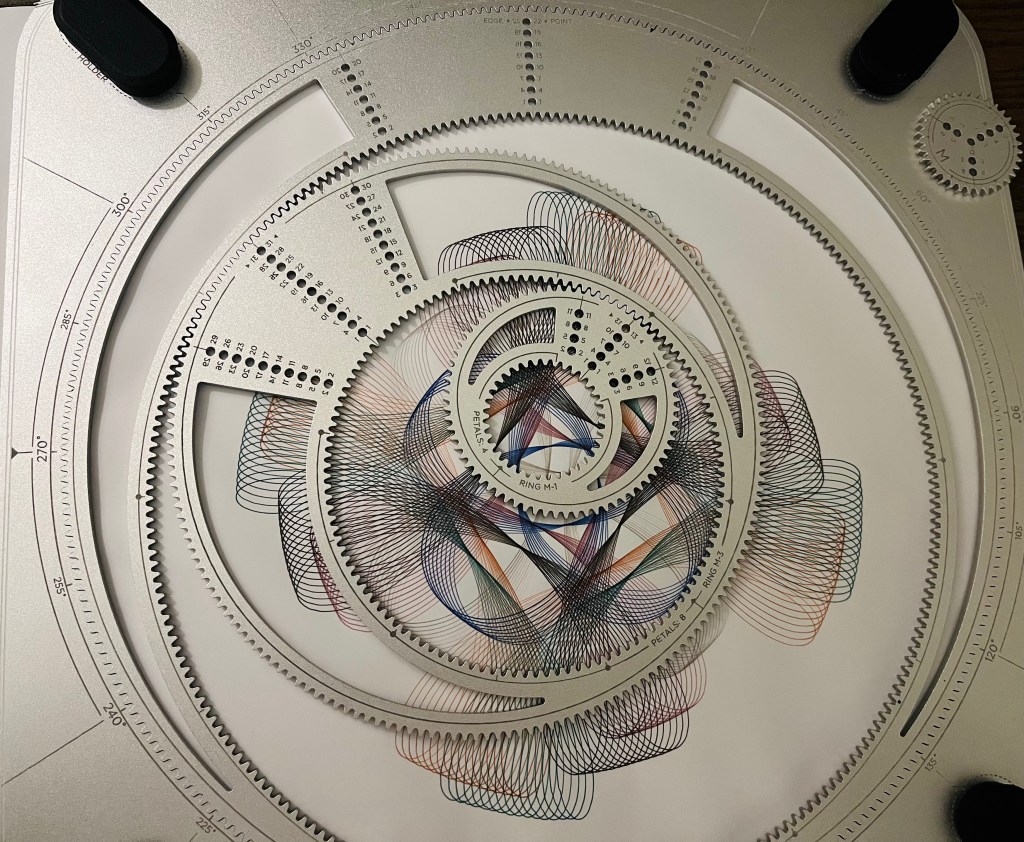
Spirograph drawings may look beautifully unpredictable, but there’s a clear mathematical structure underneath every curve. Once you understand a few simple ideas—gear ratios, prime factors, and pen offsets—you can predict what your design will look like before you even start.
This transforms Spirographing from a nostalgic activity into a precise and creative design process.
1. Why Spirograph Designs Are Predictable
Every Spirograph pattern is created by two gears:
- The ring (the stationary outer gear)
- The inner gear (the one you roll and place your pen inside)
The relationship between these gears determines how many “petals” or loops your final design will have.
The key formula is:
Ring Teeth ÷ Gear Teeth = Pattern Ratio
Then you simplify that ratio just like a fraction.
Example
Using an 80-tooth ring and a 48-tooth gear:
80 / 48 = 5 / 3
What this tells you:
- The top number (5) = your design will have 5 petals
- The bottom number (3) = the inner gear will roll around three full times before the pattern closes
This one ratio lets you predict the structure of your design before drawing a single line.
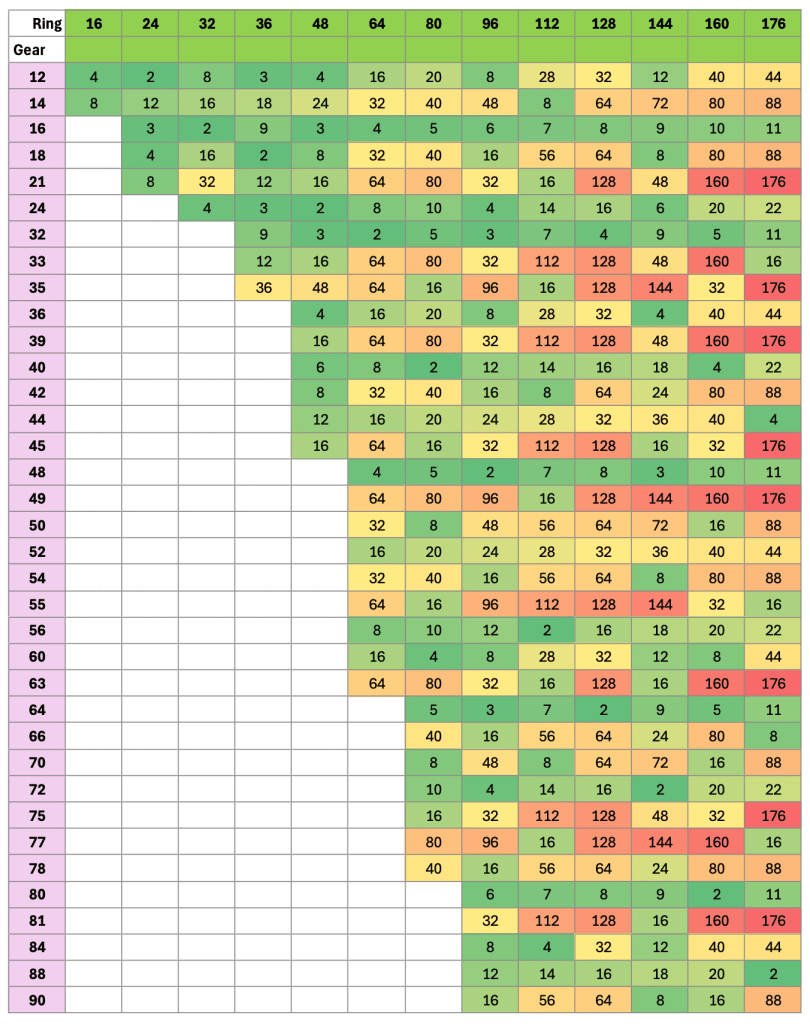
2. Prime Factors: The Secret to Pattern Complexity
If you want to know whether a design will be simple or intricate, look at the prime factors of the ring and gear numbers.
Rule of Thumb
- When the ring and gear share many prime factors, the pattern is:
- clean
- balanced
- fewer petals
- When the ring and gear share few or no prime factors, the pattern is:
- dense
- detailed
- full of many tiny loops
This is why some combinations feel airy and floral, while others look woven or almost digital.
3. Using Doughnut Pieces to Create Parallel Lines
Some advanced Spirograph sets include small plastic “doughnut” pieces. These hold the pen at a slight offset from the center of the inner gear.
Changing the doughnut size changes the look of your line work:
- Large doughnut → wider spacing between lines
- Small doughnut → tighter, more compact parallel curves
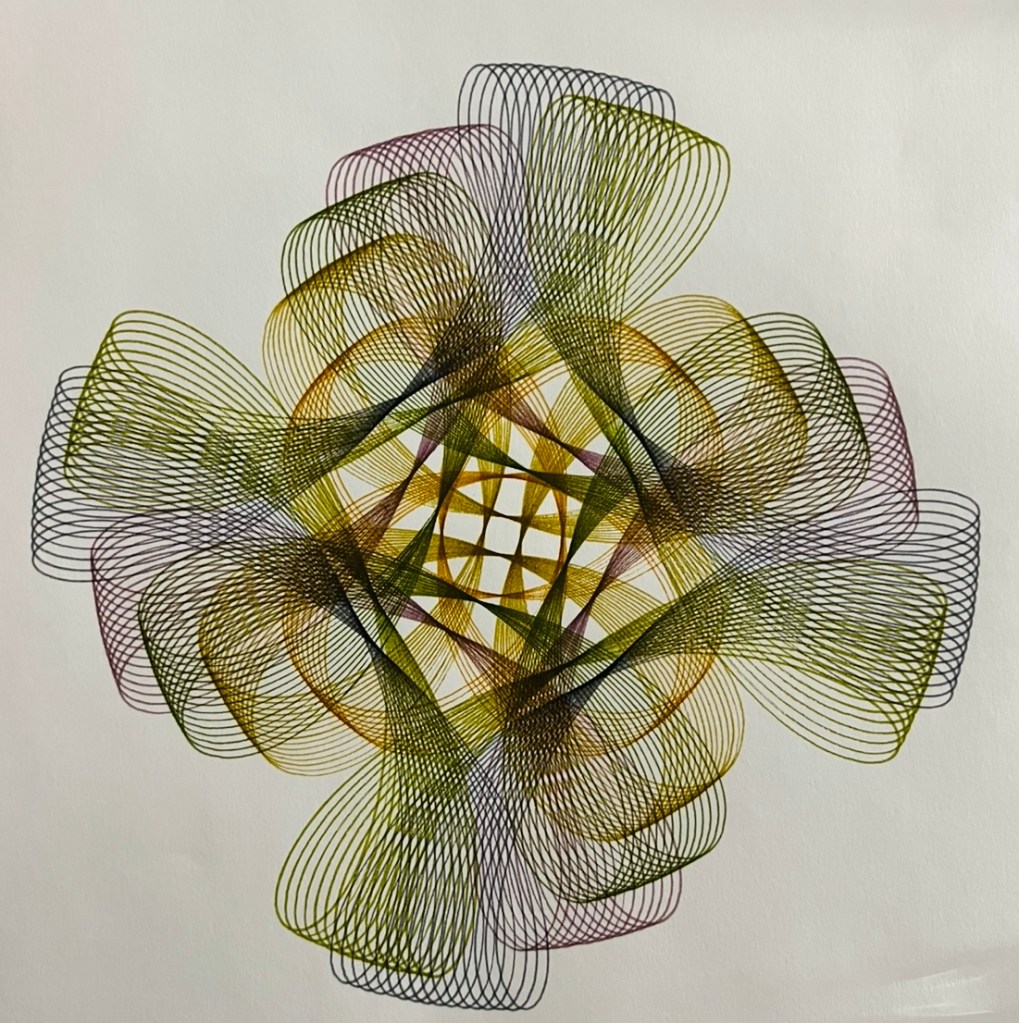
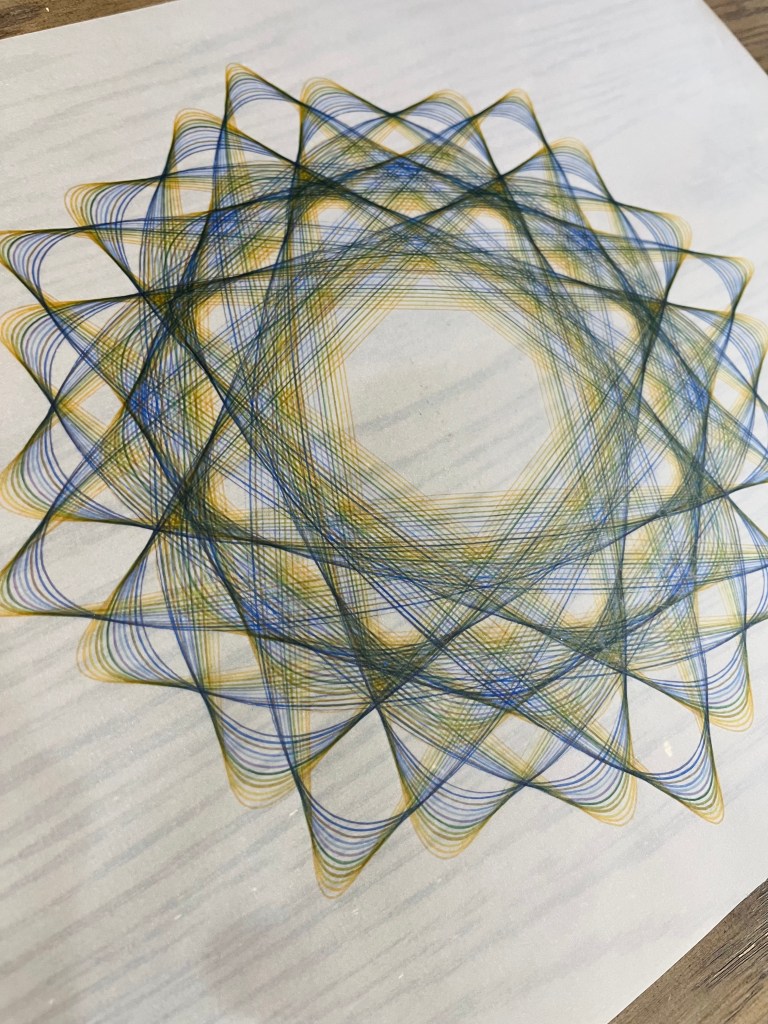
Running the same gear combination multiple times with different doughnut sizes creates layered ribbons of color—similar to what you’d see in professional geometric art.
4. Predicting More Than Just Petal Count
Once you get comfortable with gear ratios, you can start predicting:
- how symmetrical the pattern will be
- whether loops will cross or stay parallel
- how “open” or “dense” the center appears
- how multiple passes will interact when layered
This is where artistry comes into play. You’re no longer just rolling a gear—you’re designing a composition.
5. Designing Your Own Spirograph Art
With prediction, you can intentionally create specific effects:
- Choose a simple ratio (like 5/1 or 8/2) for bold, clean petals
- Choose gear pairs with no shared factors for intricate lacework
- Use doughnut pieces for elegant parallel overlays
- Rotate colors to emphasize movement and depth
This approach turns Spirographing into a blend of mathematics, engineering, and visual art.
Spirograph patterns may look magical, but they follow predictable mathematical rules. By understanding gear ratios, prime factors, and pen offsets, you can create designs that are not just beautiful, but intentional.
Whether you’re making art for relaxation or for professional projects, prediction lets you take full creative control—transforming every drawing into a planned, expressive piece of geometric design.
 Natalie Feng
Leave a comment